Colony inspection
Guidelines for photographic documentation and observations to record during a colony inspection within the "Spring 2026" program.
Required photos
During the colony inspection, attach the following photos in the app:
- Frame with the VitalSensor with bees on it: front and back of the comb
- Outermost frame without bees: front and back of the comb
- Any other photos relevant from the beekeeper's perspective
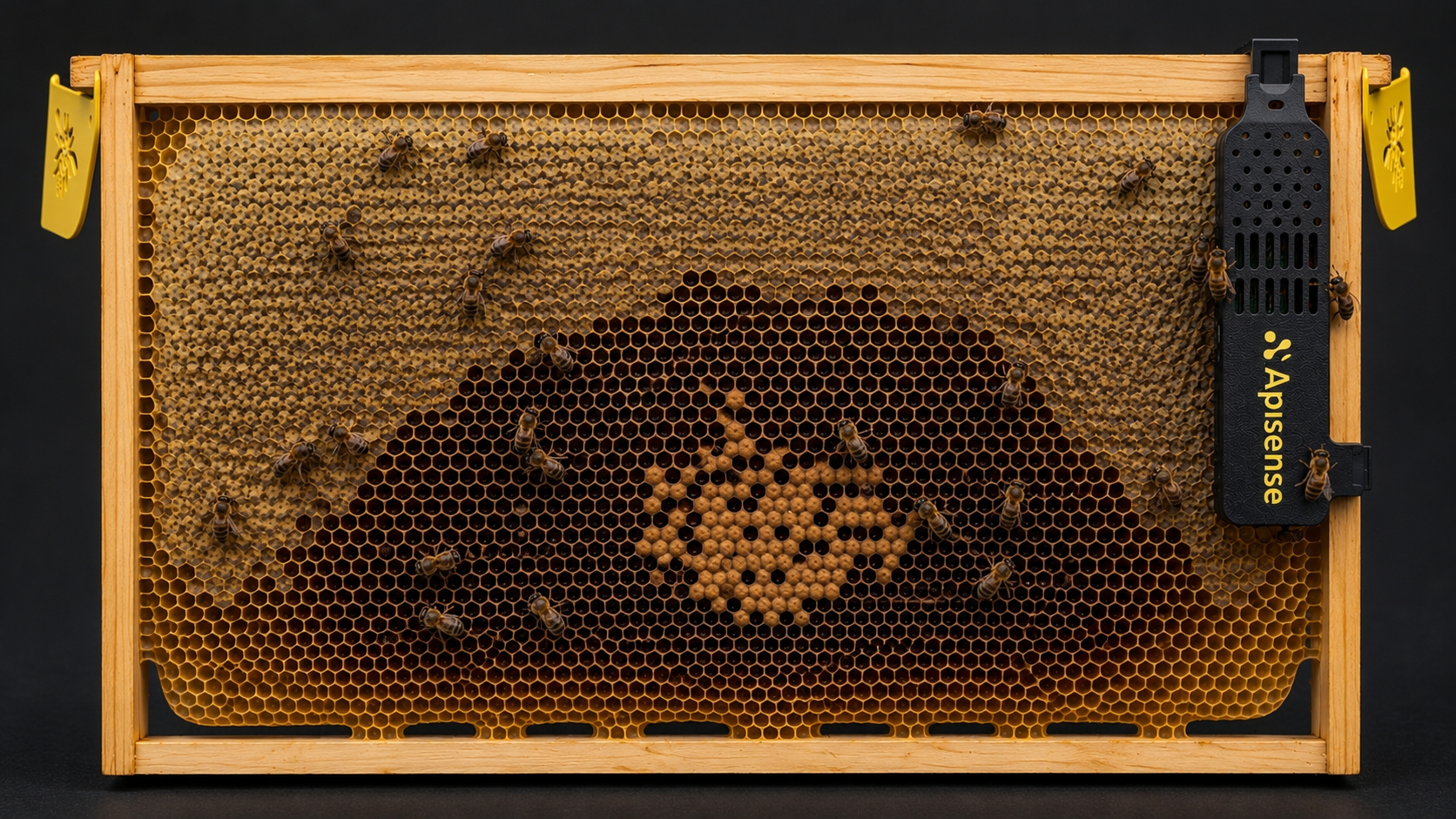
Apisense holders make it easier
The Apisense holders included in the kit (yellow brackets that mount on the hive walls and hold the frame steady while you photograph it) make these shots much easier.
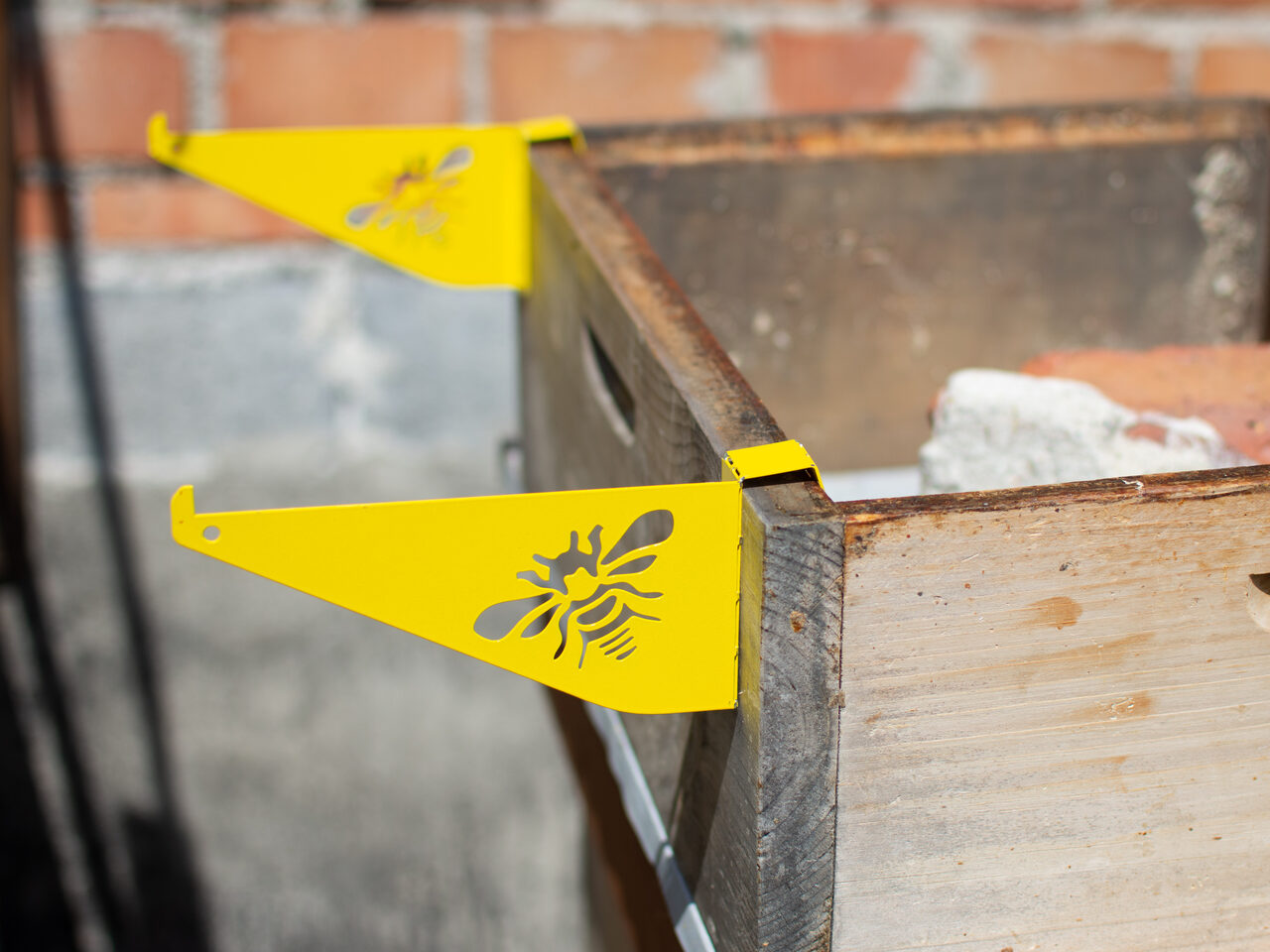
Observations to record in the app
During the inspection, watch for:
- Prophylactic and medical treatments, including herbs, supplements, probiotics, etc., ideally with the dose (you can attach a photo of the package or leaflet)
- Queenless period
- Introduction of a new queen (mated or virgin)
- Queen rejection
- Quiet supersedure
- Swarming mood and swarm season
- Any other significant events in the colony
- Other observations, e.g. risk of contact with pesticides, bees using contaminated water sources
Recommended additional photos
These photos are encouraged (preferably without bees on the frame if possible):
- Frames with queen cells
- Frames with brood (open, capped, scattered, drone, etc.)
- Frames with uncapped honey/nectar
- Frames with bee bread (pollen)
- Frames with workers and the queen
- Frames with workers and drones
- Eggs in cells
- Frames with bees carrying pollen loads
- Bees with visible Varroa mites
- Bees with deformed wings
- Frames with wax foundation: new, drawn, ready for melting, damaged, with wild comb
Atypical disease symptoms
For atypical disease symptoms, contact the coordinators or Dr Maciej Bryś directly.